Wieliczka Salt Mine Tour from Krakow 2026
In this guide
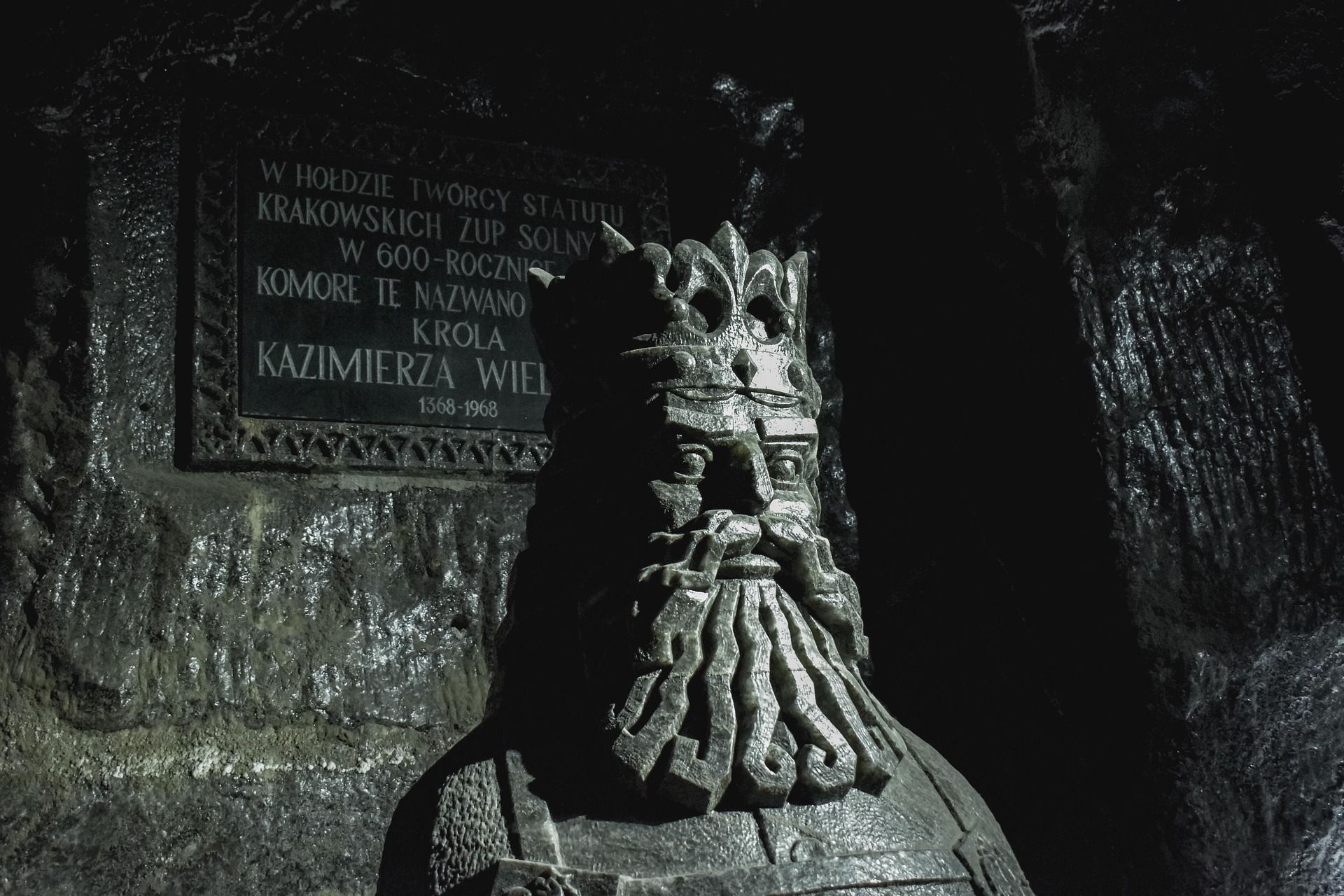
The Wieliczka Salt Mine stretches over 287 kilometres of tunnels and chambers, 135 metres below the surface.
Why Visit the Wieliczka Salt Mine
The Wieliczka Salt Mine was one of the first twelve sites inscribed on the UNESCO World Heritage List in 1978 — alongside the Galápagos Islands and the historic centre of Krakow itself. That gives you a sense of its significance.
What makes it genuinely worth visiting is the combination of scale and human craftsmanship. The Tourist Route covers 3.5 kilometres and descends through three levels to 135 metres below the surface. Along the way you pass through 20 chambers — some are vast cathedral-like spaces, others narrow glittering corridors — all carved by miners who worked this salt from the 13th century until 2007.
Salt was medieval Europe's most valuable commodity, and the Wieliczka mine was a primary source of Poland's wealth for centuries. The miners who worked it left behind something extraordinary: an underground world decorated with chapels, sculptures, and bas-reliefs, every element carved from salt.
How to Get to Wieliczka Salt Mine from Krakow
Wieliczka is 15 kilometres southeast of Krakow city centre — close enough to reach in 30 minutes, but far enough that transport logistics matter. You have four options.
Option 1: Guided Tour with Transfer Included (recommended)
The simplest option for first-time visitors. An English-speaking guide picks you up near your hotel in Krakow, drives you to the mine, leads you through the full Tourist Route, and returns you to the city. No navigation, no queuing at the ticket office, no figuring out train times.
Option 2: Train from Krakow Główny
Regular trains run from Krakow Główny station to Wieliczka Rynek-Kopalnia — a short walk from the mine entrance. Journey time is approximately 30 minutes, with frequent departures throughout the day. You still need to buy mine tickets separately and join a guided group on arrival.
Option 3: Bus
Bus 304 connects Krakow city centre to Wieliczka. Journey time is 30–40 minutes depending on traffic — less convenient than the train but a budget option.
Option 4: Private Transfer
A private vehicle drops you directly at the mine entrance. You arrange mine tickets separately on arrival. Useful if you want full flexibility over timing.
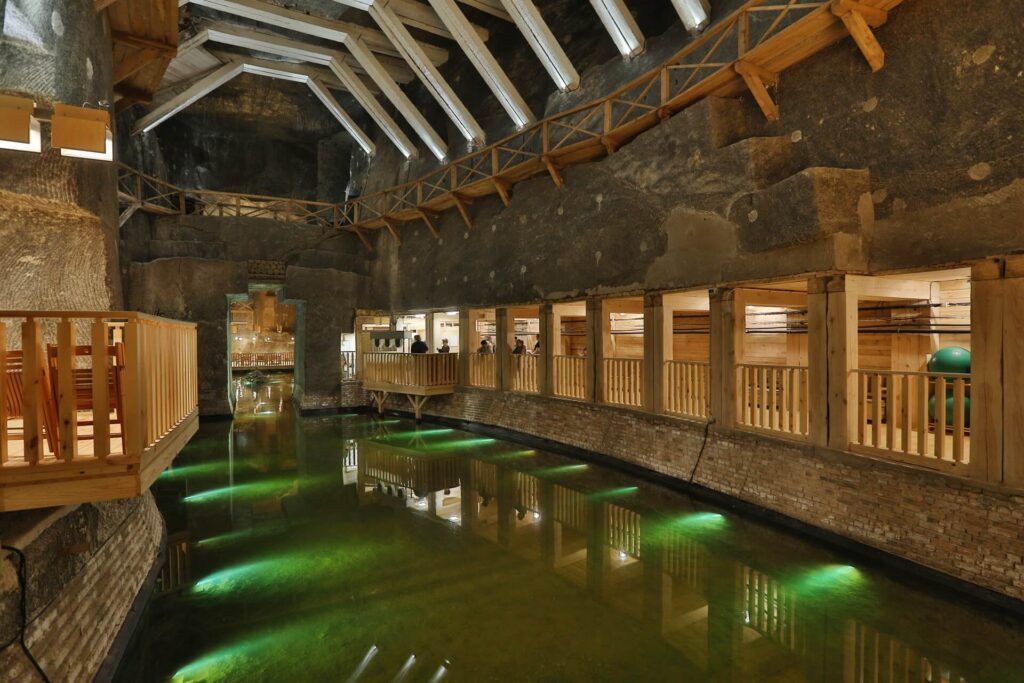
A licensed guide leads the tour through the mine's 20 chambers, covering 3.5 kilometres of route.
Wieliczka Salt Mine Guided Tour — What's Included
When you book through Krakow Planner, the tour includes:
- Round-trip transport from Krakow (pick-up near your accommodation)
- Licensed English-speaking guide for the journey from Krakow
- Skip-the-line entry — no waiting at the ticket office on arrival
- Entry ticket to the mine
- Official Wieliczka mine guide for the underground route
- Return transport to Krakow city centre
Duration: Approximately 4 hours total including transport. The underground tour itself takes 2–2.5 hours.
Group size: Standard tours accommodate up to 35 visitors. The underground guide leads groups through the Tourist Route with commentary at each major chamber.
Languages: English-language tours run daily. Other languages available on request.
The Chapel of St. Kinga
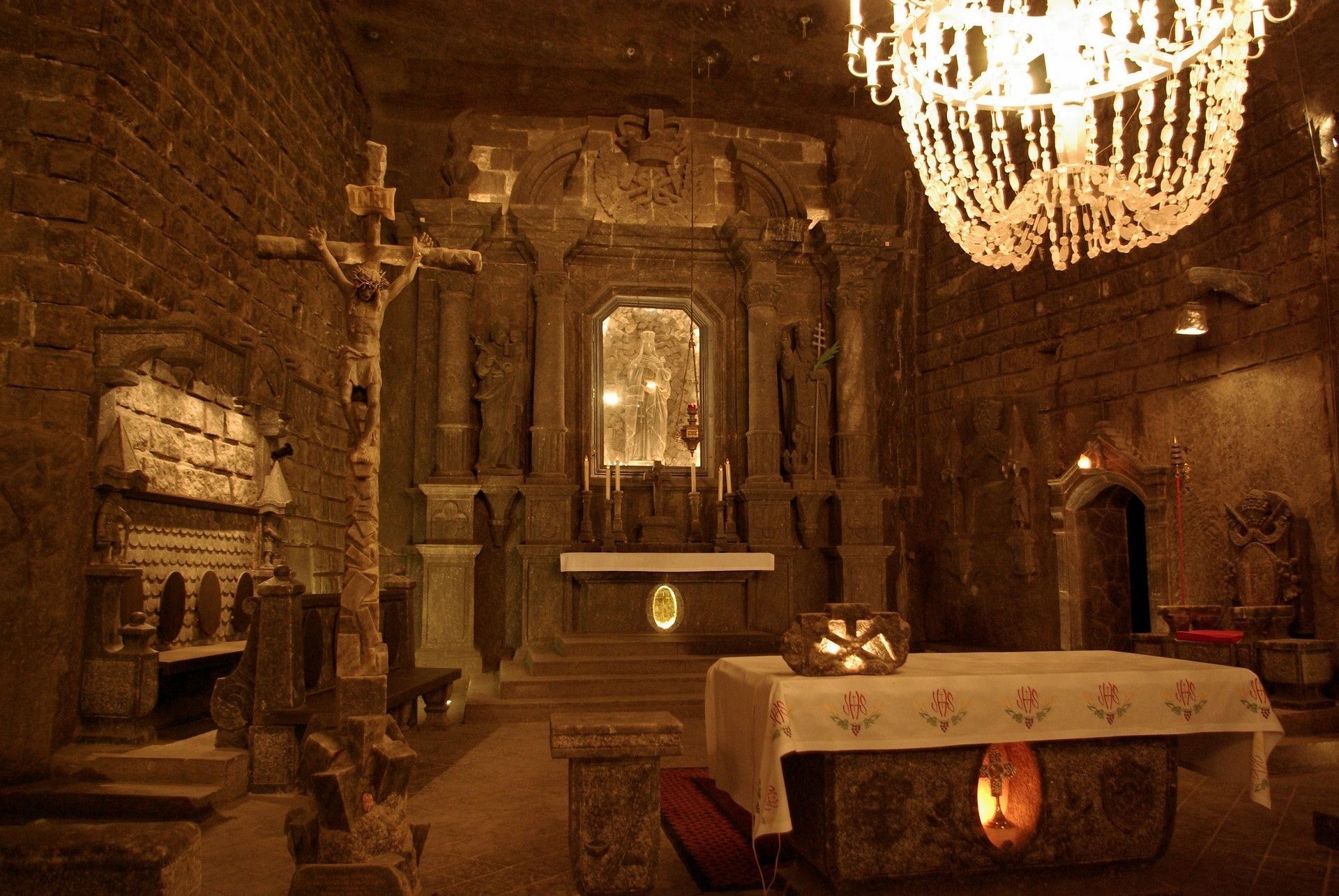
The Chapel of St. Kinga, 101 metres below the surface — every surface carved from rock salt by miners over three centuries.
No description of the Wieliczka Salt Mine is complete without the Chapel of St. Kinga. Located 101 metres below the surface, this underground church is one of the most extraordinary spaces you will ever stand in.
The chapel is 54 metres long, 18 metres wide, and 12 metres high. Every surface — the walls, the floor, the chandeliers, the bas-reliefs depicting scenes from the New Testament — is carved from rock salt. The chandeliers are made from salt crystals treated to resemble glass. Even the altar is salt.
Miners began building the chapel in the 17th century and worked on it for generations. Today it remains an active place of worship — masses are held here regularly — and one of Poland's most visited underground spaces.
Stairs, Temperature & What to Expect Underground
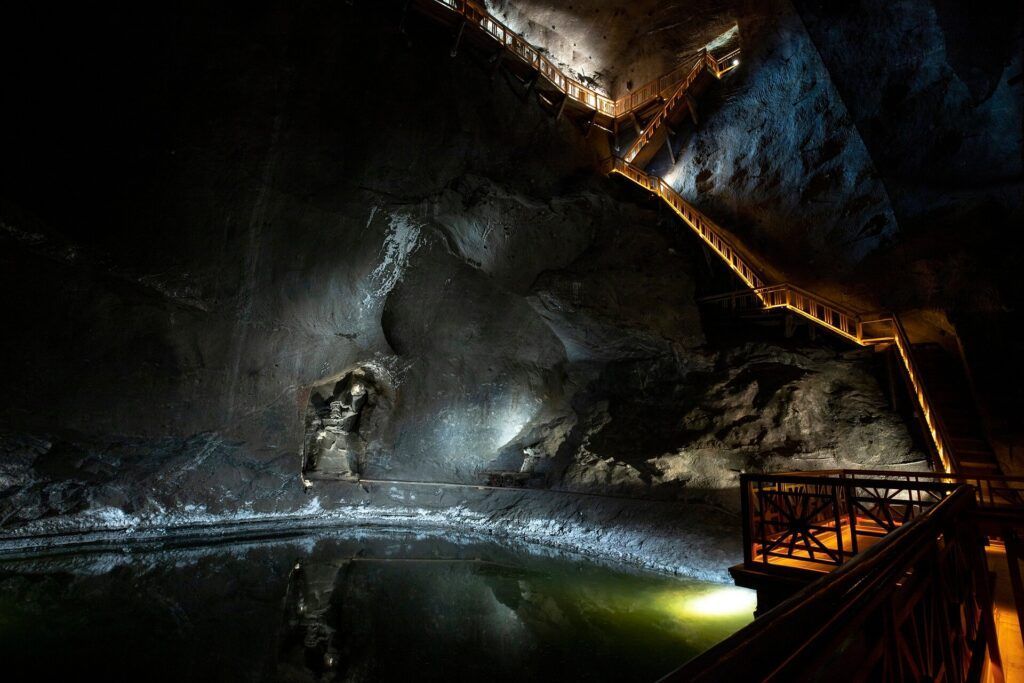
The descent begins with 380 wooden steps. The return to the surface is by mining elevator.
The most common question about the Wieliczka Salt Mine — and a fair one to ask before you book.
The descent: The tour begins with a wooden staircase of 380 steps down to the first level, 64 metres below the surface. This takes 10–15 minutes at a steady pace. The stairs are well-lit with handrails throughout. Most visitors in reasonable health find it manageable, including older travellers and older children.
Underground: Once at the first level, the route is mostly flat or gently sloping, with occasional stairs between levels. Total walking distance on the Tourist Route is approximately 3.5 kilometres.
The ascent: You do not climb back up the 380 stairs. The return to the surface is by lift — a fast mining elevator from 135 metres below ground to the exit in under a minute.
Temperature: The mine maintains a constant 14°C (57°F) year-round. Bring a light jacket regardless of the weather above ground — it is noticeably cooler underground, particularly in summer.
Opening Hours & Best Time to Visit
The mine is busiest between 10:00 AM and 2:00 PM, particularly on weekends and in July and August when Krakow is at peak tourist season. The first entry of the day (7:30 AM in summer) is the quietest — smaller groups, less waiting, better conditions for photos.
Booking in advance is strongly recommended year-round. Entry slots fill up, particularly on weekends and during Polish school holidays. Booking through Krakow Planner includes skip-the-line entry so you bypass the ticket queue on arrival.
Wieliczka Salt Mine + Auschwitz — One Day
For travellers who want to cover two of Poland's most significant UNESCO sites in a single day, a combined Auschwitz and Wieliczka tour is possible — and we offer it as a structured full-day trip from Krakow.
The itinerary visits Auschwitz-Birkenau in the morning, then Wieliczka Salt Mine in the afternoon. It is a long day — approximately 10–11 hours — and emotionally demanding given the contrast between the two sites. But for visitors with limited time in Krakow, it is the most efficient way to experience both.
Note: This combined tour is best suited to visitors who can manage a full day of walking and are prepared for the emotional weight of the Auschwitz visit. Not recommended for young children.
Frequently Asked Questions
Is the Wieliczka Salt Mine worth visiting?
Yes — unambiguously. The Chapel of St. Kinga alone justifies the trip. The scale of the underground world combined with centuries of human craftsmanship makes it one of the most memorable experiences in Poland. It consistently ranks among the top-rated attractions in all of Central Europe.
How long does the Wieliczka Salt Mine tour take?
The underground Tourist Route takes 2–2.5 hours. Including transport from Krakow and return, expect approximately 4 hours total — a half-day commitment.
How do I get to the Wieliczka Salt Mine from Krakow?
The easiest option is a guided tour with transport included — pick-up from your Krakow accommodation, no logistics required. Alternatively, trains run from Krakow Główny to Wieliczka Rynek-Kopalnia in approximately 30 minutes.
How many stairs are there at Wieliczka Salt Mine?
The descent involves 380 stairs down to the first level (64 metres below ground). The return to the surface is by elevator — you do not climb back up. Total walking on the tour route is approximately 3.5 kilometres on mostly flat terrain.
What is the temperature inside the Wieliczka Salt Mine?
A constant 14°C (57°F) year-round. Bring a light jacket — it is noticeably cooler than above ground, particularly in summer.
Do I need to book Wieliczka Salt Mine tickets in advance?
Yes — strongly recommended, especially in peak season (June–August) and on weekends. Entry slots fill up quickly. Booking through Krakow Planner includes skip-the-line entry and instant confirmation.
Can I visit the Wieliczka Salt Mine with children?
Yes — it is very family-friendly. Children are generally fascinated by the underground world and salt sculptures. The main challenge is the 380-step descent, which is manageable for most children aged 5 and above. The elevator return means no climbing on the way back.
What is the difference between the Tourist Route and the Miners' Route?
The Tourist Route covers the mine's most iconic chambers, including the Chapel of St. Kinga — recommended for first-time visitors. The Miners' Route is a more hands-on experience focused on the history of salt extraction, with interactive demonstrations of traditional mining methods.